Waterproof Flooring Myths: What’s Really Waterproof and What Isn’t (Beginner Guide)
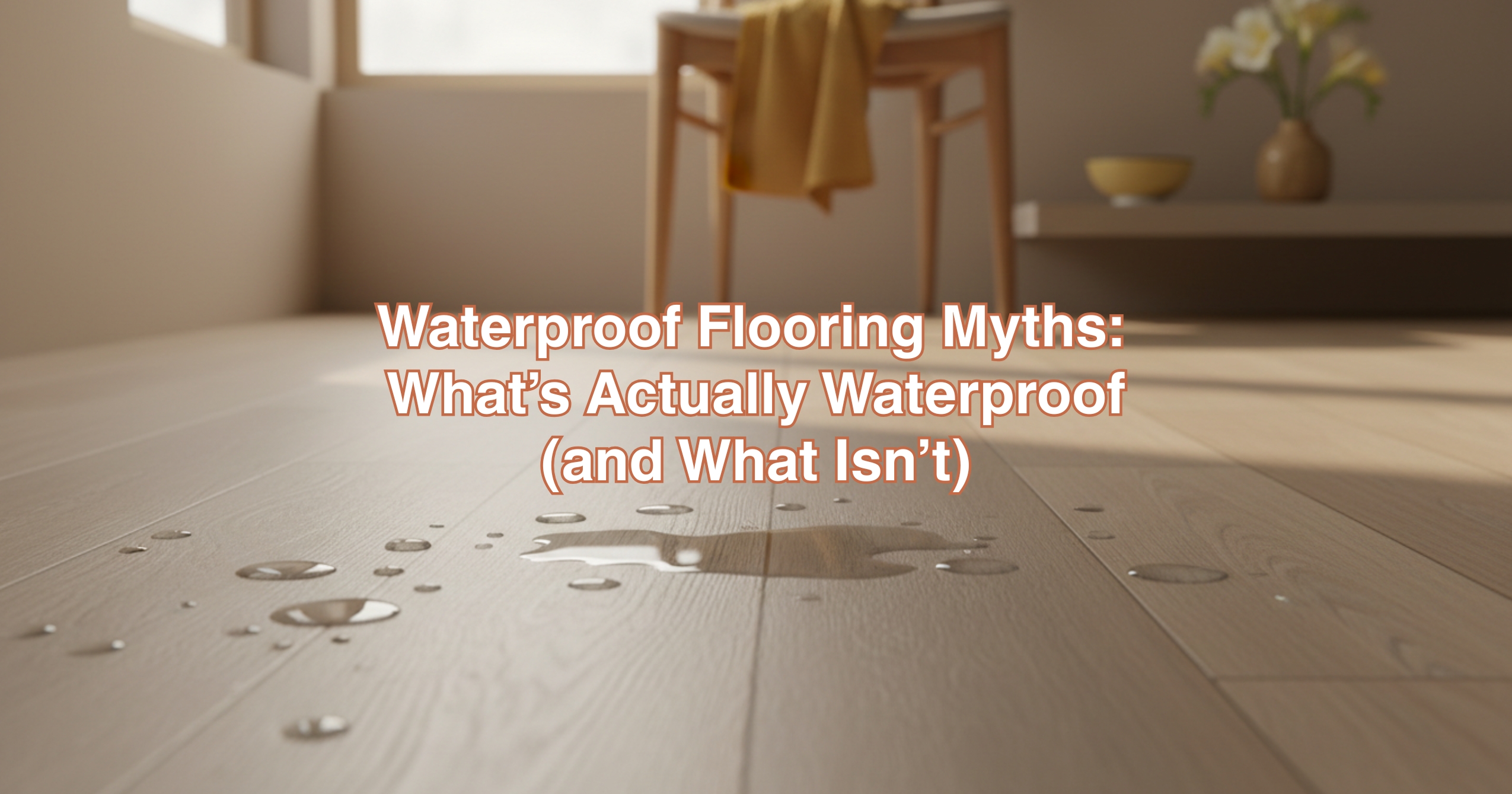
Waterproof Flooring Myths: What’s Actually Waterproof (and What Isn’t)
Introduction
“Waterproof flooring” has become one of the most heavily advertised terms in the flooring industry, but it doesn’t always mean what homeowners think it does. Many people understandably assume waterproof flooring can’t be damaged by water or spills, or that it can handle leaks, floods, or long-term moisture exposure without consequence.
In reality, waterproof often describes very specific parts of the flooring product, not every component of the installation or the subfloor beneath it. This guide takes a calm, practical look at what waterproof flooring actually means, what it can and cannot handle in real life, and how to choose flooring with realistic expectations instead of marketing hype.
What “Waterproof Flooring” Usually Means
Most flooring labeled as waterproof refers to the surface material and the core structure being resistant to water absorption.
In other words:
the plank itself won’t swell or warp when exposed to moisture
water will not penetrate into the material the same way natural wood does
This applies to many:
SPC rigid core floors
WPC waterproof vinyl
certain vinyl plank systems
However, it does not automatically guarantee that:
seams are fully watertight
subfloors are protected
standing water won’t cause damage elsewhere
Waterproofness exists at the material level, not always at the installation level.
Waterproof vs Water-Resistant — What’s the Difference?
These terms are often used interchangeably, but they’re not the same.
Water-resistant flooring:
can handle occasional spills or moisture
requires cleanup within a reasonable time
may swell if water sits for too long
Common examples include:
laminate
certain hardwood finishes
Waterproof flooring:
does not absorb water into the plank itself
maintains its structural integrity when exposed to moisture
However:
water can still reach the seams, edges, or subfloor
mold or odors may develop if moisture gets trapped
So yes, the plank may be waterproof — but the environment around it may not be.
What Waterproof Flooring Can Handle Well
Waterproof flooring performs well in everyday moisture situations like:
kitchen spills
pet accidents
tracked-in rain
light bathroom moisture
routine cleaning
When cleaned promptly, waterproof vinyl or rigid core flooring:
resists swelling
maintains shape
avoids soft-surface warping
This makes it a practical option for:
busy households
homes with pets
family living spaces
Where Waterproof Flooring Has Real-World Limits
Despite the name, waterproof flooring is not immune to long-term moisture issues.
1) Standing water
Extended water exposure can still:
seep through seams
travel underneath planks
affect subfloors or adhesives
Even if the plank survives, the floor system may not.
2) Flooding or major leaks
No floating flooring system is designed for:
appliance leaks left unnoticed
burst pipes
large spills left for days
Water may become trapped below the surface where airflow and drying are limited.
3) Moisture from below the subfloor
Basement slabs and concrete subfloors may release:
vapor moisture
minerals or efflorescence
This can lead to:
cupping
lifting
discoloration
Even with a waterproof plank material.
Common Myths About Waterproof Flooring
Myth 1: “Waterproof flooring means nothing can damage it.”
Reality: waterproof flooring prevents material swelling, but it does not prevent moisture-related complications beneath or around it.
Myth 2: “I can install waterproof flooring anywhere without prep.”
Subfloor preparation still matters, including:
vapor barriers where appropriate
moisture testing on concrete
leveling for stability
Waterproof flooring is not a substitute for proper installation.
Myth 3: “All waterproof floors perform the same.”
Performance varies based on:
wear layer
core construction
locking system
installation conditions
Labels do not tell the full story.
Where Waterproof Flooring Makes the Most Sense
Waterproof flooring is especially useful in:
kitchens
laundry rooms
entryways
family spaces with pets or spills
It provides peace of mind in areas where incidental moisture is expected, not continuous water exposure.
Where Extra Caution (or Alternatives) May Be Better
Consider careful evaluation in:
basements
enclosed patios
high-humidity environments
flood-prone areas
In these situations, subfloor moisture management is just as important as the flooring choice itself.
Simple Decision Guide (Beginner-Friendly)
Choose waterproof flooring if your priority is:
spill protection
everyday resilience
family-friendly practicality
But also plan for:
proper subfloor preparation
reasonable cleaning expectations
Waterproof is a helpful feature, not a guarantee against every moisture condition.
Key Takeaway: Waterproof Flooring Is Durable — Not Invincible
Waterproof flooring can be an excellent choice when selected with realistic expectations.
It excels at:
handling everyday spills
preventing plank swelling
supporting low-maintenance living
It is not designed for:
standing water
structural moisture issues
long-term leak exposure
Understanding the difference leads to clearer, more confident flooring decisions.
Conclusion
Understanding what waterproof flooring really means helps set realistic expectations about how it performs in everyday moisture situations. Waterproof planks resist swelling and hold their shape during spills and routine cleaning, but they cannot prevent issues caused by standing water, trapped moisture, or leaks beneath the surface. When you evaluate waterproof flooring as a helpful protective feature rather than a guarantee, flooring choices become more practical and better aligned with real-world conditions.
Now that you understand what waterproof flooring can and cannot do, the next step is looking at how flooring performs in real-life situations, especially in homes with kids, pets, and busy daily activity. In our next article, we explore Best Flooring for Pets, Kids, and Busy Homes, where we shift from technical features to lifestyle-based performance. If you’d like help reviewing flooring options for moisture-prone areas in your home, visit our showroom at 2591 N Forsyth Rd Ste A, Orlando, FL 32807.