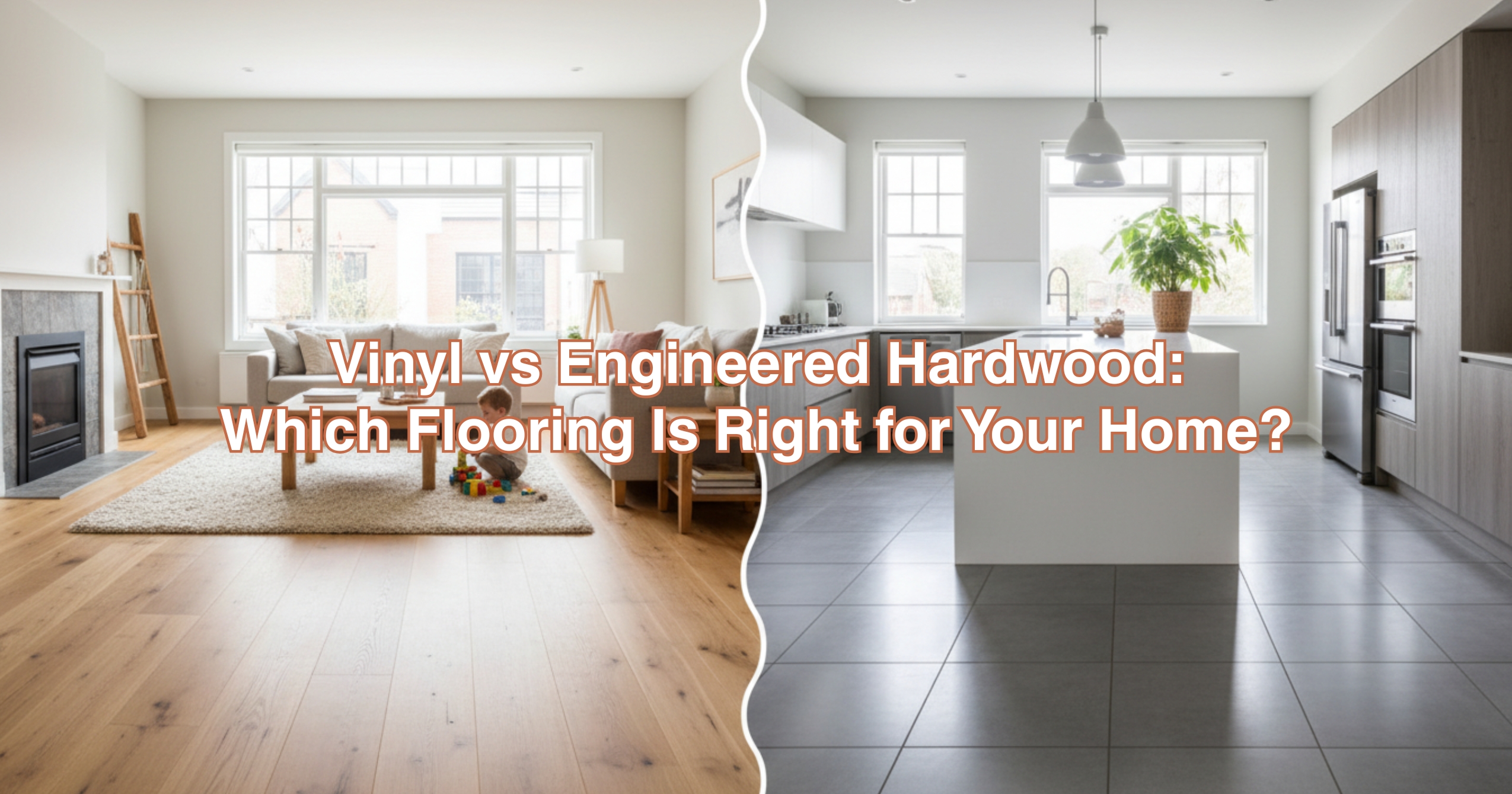
Vinyl vs Engineered Hardwood: Pros, Cons, Durability, and Which Is Best for Your Home
Vinyl vs Engineered Hardwood: Which Flooring Is Right for Your Home?
Introduction
Vinyl plank flooring and engineered hardwood are two of the most popular flooring choices for modern homes, and for good reason. Both offer beautiful finishes, wide design options, and strong performance when installed in the right space. But they are also very different materials, and choosing between them can feel overwhelming when every brochure, article, or sales display seems to highlight a different advantage.
The truth is, neither option is universally “better.” Instead, each one makes sense in different situations, depending on your lifestyle, expectations, and how you plan to use the space. This guide walks through the real-world differences between vinyl and engineered hardwood in clear, beginner-friendly terms so you can decide which one feels right for your home, without pressure, jargon, or marketing buzzwords.
What Vinyl Flooring Really Is
Vinyl plank (often called LVP or luxury vinyl plank) is a synthetic flooring material designed to look like wood while offering:
strong wear resistance
high moisture tolerance
easy maintenance
Modern vinyl flooring may come as:
flexible vinyl plank
rigid core vinyl (SPC or WPC)
waterproof vinyl systems
It does not contain natural wood, which means:
it is more stable around moisture
it does not swell or contract the way wood can
Vinyl is typically chosen for:
busy family homes
rentals or investment properties
kitchens, hallways, and high-traffic areas
homeowners prioritizing practicality and ease of care
What Engineered Hardwood Really Is
Engineered hardwood is a real wood flooring product, but it is built differently from traditional solid hardwood.
It consists of:
a top layer of real hardwood veneer
bonded to multiple stable wood layers underneath
This layered construction helps reduce:
movement from humidity
expansion and contraction
warping compared to solid hardwood
Engineered hardwood is chosen by homeowners who:
value authentic wood character
want a premium, natural look and feel
are comfortable with slightly higher maintenance expectations
It performs beautifully when installed in the right environment.
Vinyl vs Engineered Hardwood: Key Differences That Matter in Real Life
Rather than comparing these floors on technical charts, here’s how they differ in everyday use.
Durability and Wear Over Time
Vinyl plank:
resists surface abrasion well
does not dent easily under typical residential use
maintains appearance with minimal upkeep
Engineered hardwood:
can show scratches and dents more easily
may develop patina or character marks over time
can sometimes be refinished (depending on veneer thickness)
Neither is indestructible. They simply age differently.
Moisture and Spill Tolerance
Vinyl is typically:
highly water-resistant
forgiving in kitchens, bathrooms, and laundry areas
Engineered hardwood:
is more moisture-sensitive
performs best in dry, climate-controlled environments
Both options benefit from proper installation and care, but vinyl is generally safer in moisture-prone spaces.
Comfort, Warmth, and Underfoot Feel
Vinyl plank can feel:
slightly firmer or cushioned (depending on core type)
stable and forgiving underfoot
Engineered hardwood:
feels naturally warm and organic
offers the familiar character of real wood
This is one of the most personal and subjective differences.
Maintenance and Day-to-Day Care
Vinyl is generally:
low-maintenance
easy to clean
resistant to stains and spills
Engineered hardwood:
benefits from gentler cleaning habits
may require protective pads or rugs in high-traffic areas
Neither is truly high-maintenance. The expectations are simply different.
Where Vinyl Flooring Makes the Most Sense
Vinyl is often a better fit when:
your home has kids, pets, or heavy traffic
you want something durable and low-stress
moisture exposure is likely
you prefer simple cleaning and upkeep
It is frequently chosen for:
kitchens
hallways
basements
rental units
Vinyl flooring is a practical, worry-reducing choice in homes where life is busy and unpredictable.
Where Engineered Hardwood Shines
Engineered hardwood is ideal when:
design aesthetic and authenticity are priorities
you value natural material and craftsmanship
the environment is climate-controlled
you prefer a floor that develops character over time
It is commonly installed in:
living rooms
bedrooms
formal spaces
open-concept areas
Engineered hardwood brings warmth, elegance, and a sense of timelessness that synthetic materials cannot fully replicate.
Common Questions Homeowners Ask
“Which one increases home value more?”
Engineered hardwood generally carries stronger perceived resale value, but high-quality vinyl can still be attractive in practical-use homes.
“Which one lasts longer?”
It depends on lifestyle, traffic, care, and environment.
Vinyl floors maintain appearance longer in high-wear spaces.
Engineered hardwood can age gracefully when treated gently.
“Which option is more family-friendly?”
For busy, active homes: Vinyl is typically the safer and lower-stress option.
For low-traffic or design-focused spaces: Engineered hardwood may feel more rewarding.
Simple Choosing Framework (Beginner-Friendly)
Choose Vinyl Flooring if you want:
durability
moisture tolerance
easy care
a practical solution for active living
Choose Engineered Hardwood if you want:
natural character
premium aesthetic
a warm, refined home environment
There is no right choice, only the one that best fits how your home is lived in.
Key Takeaway: Match the Floor to Your Lifestyle, Not a Trend
Both vinyl plank and engineered hardwood can be excellent choices when selected thoughtfully.
Rather than asking:
“Which one is better?”
Ask instead:
“Which one makes the most sense for the way my home is used every day?”
Clarity leads to confident decisions and fewer regrets later.
Conclusion
Understanding the real-world differences between vinyl plank and engineered hardwood helps make the decision more practical and less overwhelming. Vinyl is typically better suited for busy, moisture-prone, or high-traffic environments, while engineered hardwood shines in design-focused, climate-controlled spaces where natural character and warmth are priorities. When you choose based on lifestyle and expectations instead of trends, you are far more likely to feel satisfied with your decision long-term.
Once you’ve chosen a general flooring direction, the next question is often about thickness, specifically whether thick planks or thin planks are more comfortable, durable, or stable. In our next article, we explore Thick vs Thin Planks: Durability, Comfort, and Stability so you can understand how plank thickness really affects performance in everyday living. If you’d like to review real samples or compare flooring materials in person, visit our showroom.