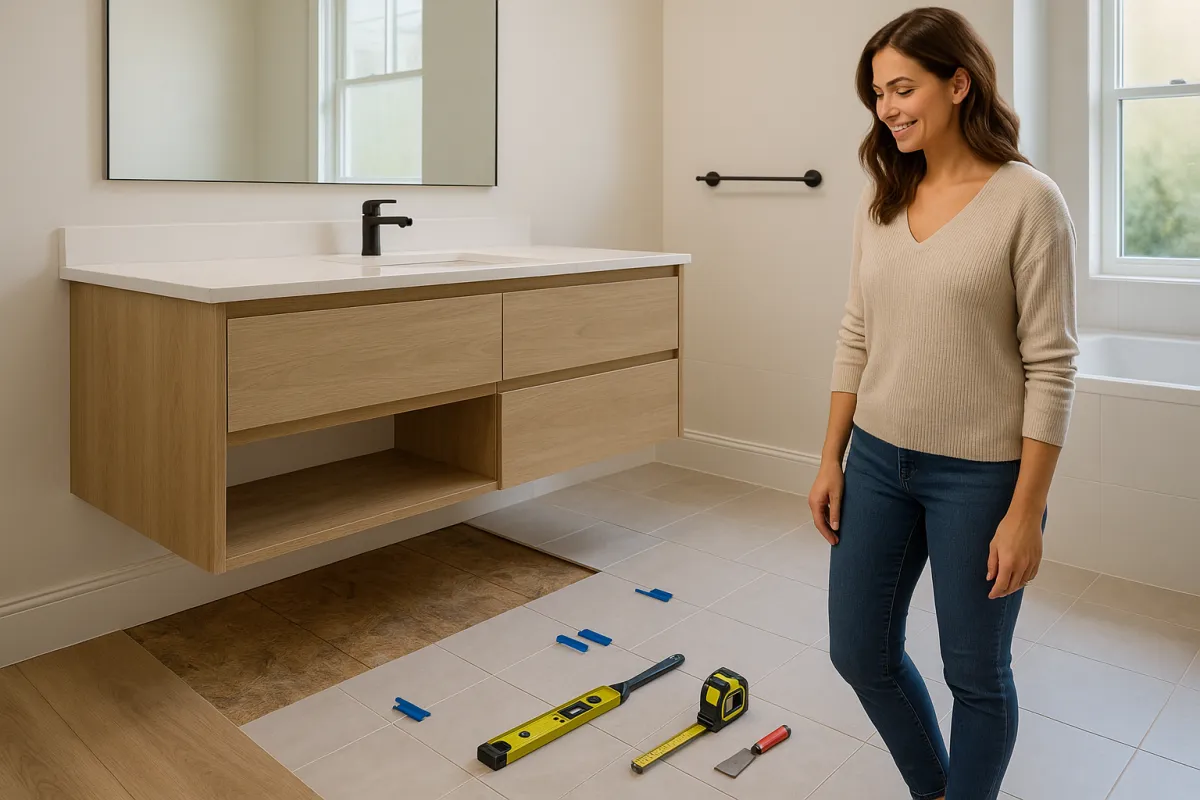
Install Vanity Over or Under Tile? Bathroom Flooring Guide
Should You Install Your Bathroom Vanity Over or Under New Flooring? Pros and Cons Explained
It’s one of those tiny remodeling decisions that somehow turns into a huge debate:
Does the vanity go on top of the new tile — or does the tile go around the vanity?
Believe it or not, this choice affects plumbing, installation costs, long-term maintenance, and even the resale value of your home. Here’s the clear, no-nonsense breakdown from Modano Floors’ bathroom renovation experts.
Why This Decision Matters More Than You Think
Bathrooms are small spaces with big responsibilities.
One wrong installation choice can lead to:
Crooked vanities
Trapped flooring edges
Unexpected gaps
Leaks
Difficult future repairs
So let’s break down both methods — vanity over tile vs vanity under tile — and help you choose the smarter option for your remodel.
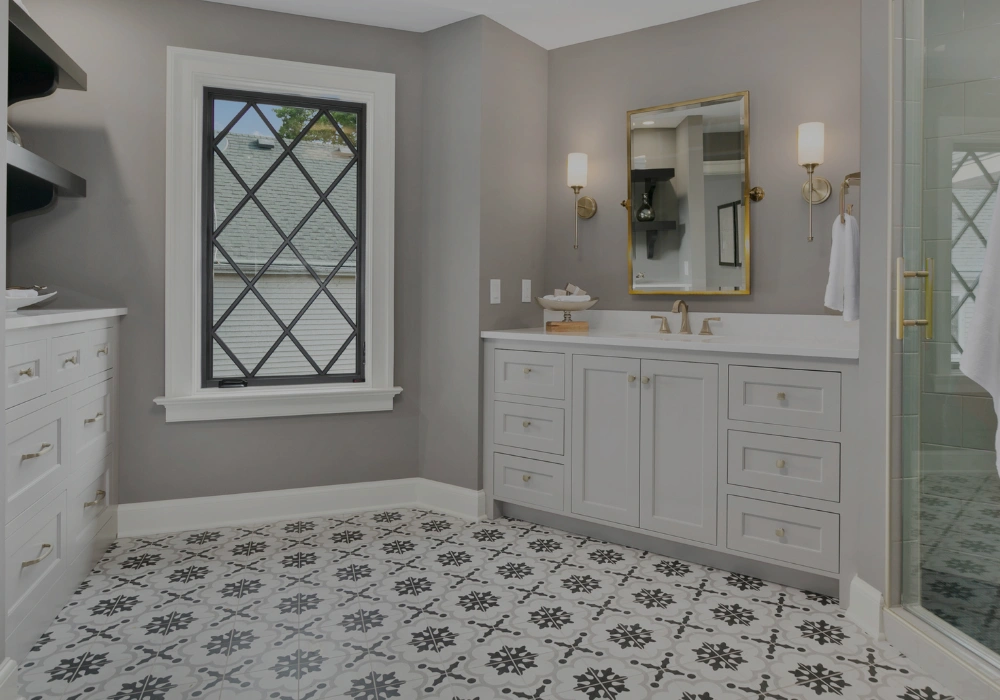
Option 1: Installing the Vanity Over the New Tile
This is the most common method in modern renovations — and for plenty of good reasons.
✅ Pros
1. Cleaner, More Modern Look
Your floor extends seamlessly underneath the vanity edge, giving a polished, high-end appearance.
2. Easier to Replace Flooring Later
If your tile cracks or you ever want to upgrade to luxury vinyl, you won’t have to remove the whole vanity to do it.
3. Better Moisture Control
Tile that runs under the vanity creates fewer exposed edges where moisture can seep in.
4. Faster Install
Your flooring installer doesn’t have to cut tile or vinyl around cabinet bases, which reduces labor time and mistakes.
❌ Cons
1. Higher Material Cost
You’re laying tile or vinyl in areas that will never be seen — under the vanity.
2. Heavy Vanities Need Care
Floating or wall-mounted vanities are fine, but super-heavy solid wood vanities must be measured precisely to avoid height differences.
Best For:
Modern bathrooms
Floating vanities
Homeowners who want easy flooring replacements later
Moisture-prone bathrooms (kids, guests, rentals)
Option 2: Installing the Vanity Before the New Flooring
This is the traditional method used in many older homes and budget-focused remodels.
✅ Pros
1. Saves Material
You use less tile or vinyl because you’re only covering visible areas.
2. Good for Fixed Plumbing Configurations
If your vanity plumbing is tricky or can’t be moved, setting the vanity first can simplify the setup.
❌ Cons
1. Harder to Replace Flooring Later
If you ever want to upgrade tile or vinyl, you’ll have to remove the vanity first — which means more cost.
2. Visible Gaps Are Common
Cutting flooring around vanities often leads to imperfect edges, exposed transitions, and inconsistent grout lines.
3. Trapped Floors
Floating floors (like luxury vinyl planks) should never be trapped under cabinetry. They need room to expand.
4. Height & Leveling Issues
Your vanity height changes based on tile thickness, which can throw off mirrors, backsplash, or plumbing alignment.
Best For:
Strictly budget-based remodels
Vanities that are built-in or extremely heavy
Tile installations where precision isn’t the top priority
Modano’s Expert Recommendation
✔️ If you’re using tile or glued-down vinyl:
Install the flooring first — then the vanity.
This creates the cleanest look and makes future updates easier.
✔️ If you’re using floating vinyl planks (LVP):
Install the vanity first — then the flooring.
Floating floors must expand and contract freely.
✔️ If you plan to remodel again in 5–10 years:
Flooring first is the safest long-term choice.
Bathroom Remodel Order (The Right Way)
Here’s the ideal sequence according to Modano’s installation team:
Demo & Plumbing Prep
Subfloor leveling + waterproofing
Tile or flooring installation (except for floating vinyl)
Vanity installation
Top + sink installation
Caulking + plumbing reconnect
Mirror, lights & accessories
Follow this order, and your remodel stays smooth, efficient, and beautiful.
Final Verdict: A Small Decision, A Big Impact
Installing your vanity over or under new flooring may seem minor — but the long-term consequences are real.
With the right planning (and expert installers), you’ll avoid gaps, warped floors, and expensive surprises later.
For bathroom flooring that’s durable, gorgeous, and Orlando-proof, stop by Modano Floors — we’ll walk you through the best materials and the right installation method for your space.
📍 Orlando Showroom – 2591 N Forsyth Rd Suite A, Orlando, FL 32807
📞 (407) 753-1132
💻 modanofloors.com
People Also Ask (FAQ)
Q1: Should bathroom vanities be installed before or after tile?
Tile first is preferred for most designs — unless you’re installing floating floors.
Q2: Will installing tile under a vanity cause height issues?
Not if measured correctly. Professional installers account for tile thickness.
Q3: Can I replace tile without removing the vanity?
Yes — if your tile extends underneath the vanity.
Q4: What’s the best flooring for bathrooms in Florida?
Porcelain tile, waterproof vinyl planks, or glued luxury vinyl tile.
Q5: Does flooring go under the toilet too?
Yes — flooring should run under toilets for the cleanest and most leak-resistant installation.