How to Protect Your Floors from Sand and Grit in Central Florida
How to Protect Your Floors from Sand and Grit in Central Florida
Living in Orlando and Central Florida has many advantages — sunshine, beautiful parks, and easy access to Florida’s beaches. But there’s one small problem many homeowners notice inside their homes:
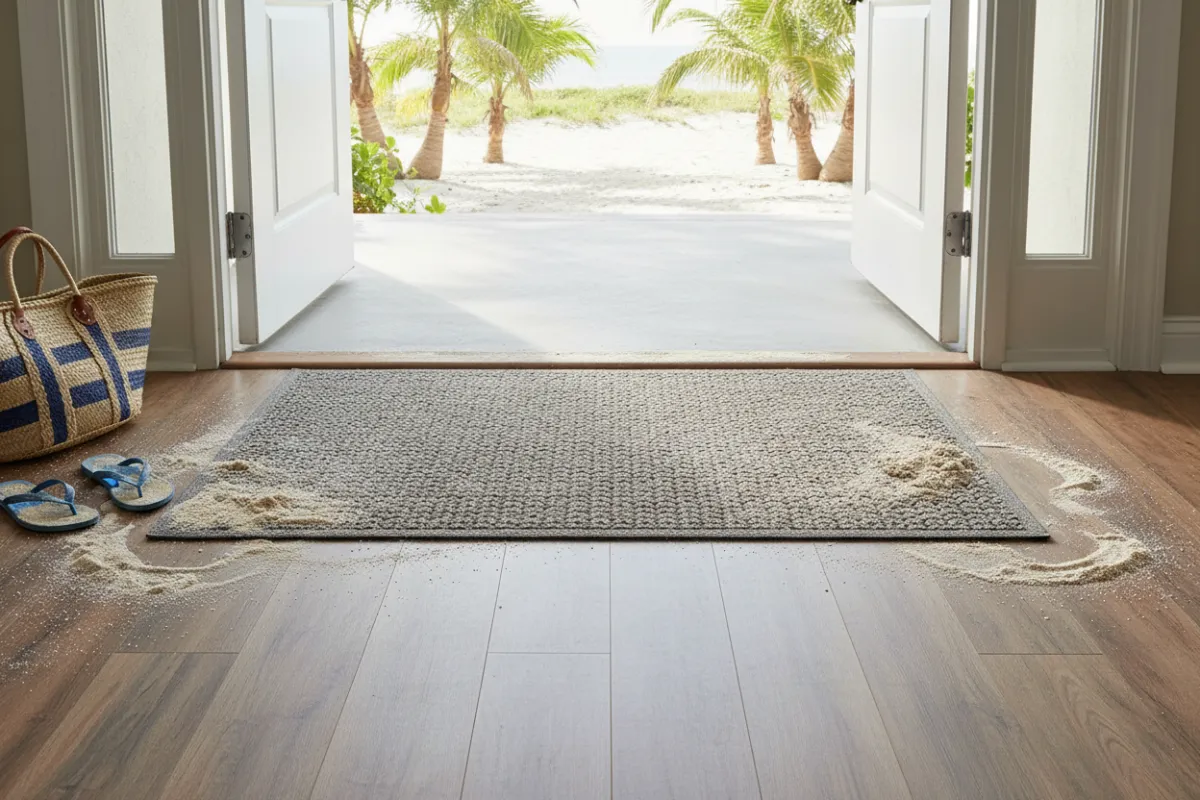
Sand and grit get everywhere.
Even if you don’t live right on the coast, fine sand easily makes its way indoors through shoes, pets, and everyday foot traffic. Over time, those tiny particles can quietly damage flooring surfaces.
If you’ve searched for “sand damage floors,” “protect hardwood Florida,” or “best entryway flooring Florida,” this guide will help you protect your floors and extend their lifespan.
Why Sand and Grit Are So Hard on Floors
Sand may seem harmless, but it’s surprisingly abrasive.
In fact, sand particles are harder than many flooring finishes. When walked on repeatedly, they behave almost like sandpaper.
Over time, grit can cause:
Micro-scratches in hardwood floors
Dull wear patterns in vinyl plank flooring
Scratched finishes on laminate floors
Worn grout and surface scratches on tile
In high-traffic homes — especially those with kids or pets — this damage can appear faster than many homeowners expect.
That’s why preventing sand from spreading through your home is the most effective strategy.
Step 1: Create a Strong Entryway Defense
The entryway is your first line of defense against sand and grit.
Many Central Florida homes benefit from a two-mat system.
Outdoor Mat
Place a durable mat outside your door that helps remove larger debris.
Look for:
✔ Coarse texture
✔ Weather-resistant materials
✔ Wide coverage area
Outdoor mats help knock off dirt before shoes even enter the home.
Indoor Mat
Inside the door, add a softer mat that traps fine particles.
Microfiber or dense fiber mats work best for capturing small grains of sand.
The key is giving people two opportunities to clean their shoes before stepping onto your flooring.
Step 2: Adopt a “Shoes-Off” Habit
Many homeowners across Florida are starting to adopt a simple rule:
Shoes off at the door.
This dramatically reduces sand entering the home.
Consider adding:
A small shoe bench
Storage for slippers
A clear but friendly sign for guests
This one habit alone can significantly reduce wear on floors.
Step 3: Sweep High-Traffic Areas Frequently
Sand accumulates quickly, especially in entryways, kitchens, and living rooms.
Regular sweeping prevents grit from being ground into the floor.
A good routine in Central Florida homes is:
✔ Sweep or vacuum entryways daily
✔ Sweep main living areas several times per week
✔ Use a vacuum without a beater bar on hard floors
Microfiber dust mops are also very effective at capturing fine particles.
Step 4: Protect Hardwood Floors in Florida
Hardwood floors are beautiful but particularly vulnerable to sand damage.
Because hardwood finishes can scratch easily, homeowners should take extra care.
To protect hardwood flooring:
✔ Use felt pads under furniture
✔ Sweep regularly to remove grit
✔ Place rugs in high-traffic zones
✔ Maintain proper indoor humidity levels
These small habits help prevent scratches and preserve the floor’s finish.
Step 5: Choose Flooring That Handles Sand Well
Some flooring materials naturally resist sand damage better than others.
If you’re building or remodeling a home in Orlando or Central Florida, durability is worth considering.
Tile Flooring
Tile is extremely resistant to abrasion.
It’s often used in Florida entryways and main living areas because it:
Handles sand well
Is easy to clean
Resists scratches
Luxury Vinyl Plank (LVP)
Modern LVP flooring is another popular option for Florida homes.
Many products include durable wear layers designed to handle everyday traffic from pets, kids, and outdoor debris.
Waterproof Flooring Options
Many homeowners choose waterproof flooring not just for spills — but also for easy cleaning when dirt and sand enter the home.
You can explore modern flooring options here:
Step 6: Use Area Rugs Strategically
Area rugs help capture grit before it spreads across your floors.
Good locations include:
Entryways
Hallways
Near sliding glass doors
Living room seating areas
Choose rugs with durable backings that stay in place.
Regularly shaking out or vacuuming rugs prevents them from becoming sand reservoirs themselves.
The Best Entryway Flooring for Florida Homes
If you’re planning a remodel, choosing the right entryway flooring can make maintenance easier.
The best entryway flooring in Central Florida homes typically includes materials that are:
✔ Scratch-resistant
✔ Easy to clean
✔ Durable under heavy traffic
Popular choices include:
Porcelain tile
Natural stone tile
High-quality luxury vinyl plank
These materials hold up well to sand, moisture, and everyday wear.
FAQ Section
Can sand really damage floors?
Yes. Sand particles are abrasive and can scratch flooring finishes over time, especially on hardwood and laminate surfaces.
What flooring handles sand best in Florida homes?
Porcelain tile and high-quality luxury vinyl plank tend to handle sand and heavy traffic better than softer flooring materials.
Final Thoughts
Sand and grit are simply part of life in Orlando and Central Florida — but that doesn’t mean your floors have to suffer.
With the right habits, entryway setup, and flooring materials, you can dramatically reduce wear and keep your floors looking beautiful for years.
If you're considering updating your flooring or want help choosing materials that perform well in Florida homes, the team at Modano Floors is happy to help.
Visit our showroom or reach out to speak with one of our flooring specialists.
📞 (407) 753-1132
📧 [email protected]
Sometimes protecting your floors starts right at the front door.