How Subfloors Affect Flooring Performance (and Why It Matters)
How Subfloors Affect Flooring Performance (and Why It Matters)
When most people shop for flooring, they focus on color, thickness, style, and durability, but one of the biggest factors influencing how a floor feels and performs isn’t visible at all: the subfloor beneath it. Two identical flooring products can behave very differently depending on what they’re installed over, which is why understanding the role of the subfloor is an important part of making a confident flooring decision.
This guide explains what a subfloor is, how it affects comfort, sound, stability, and longevity, and why proper preparation matters just as much as the flooring product itself, especially in busy households or multi-level homes.
What Is a Subfloor?
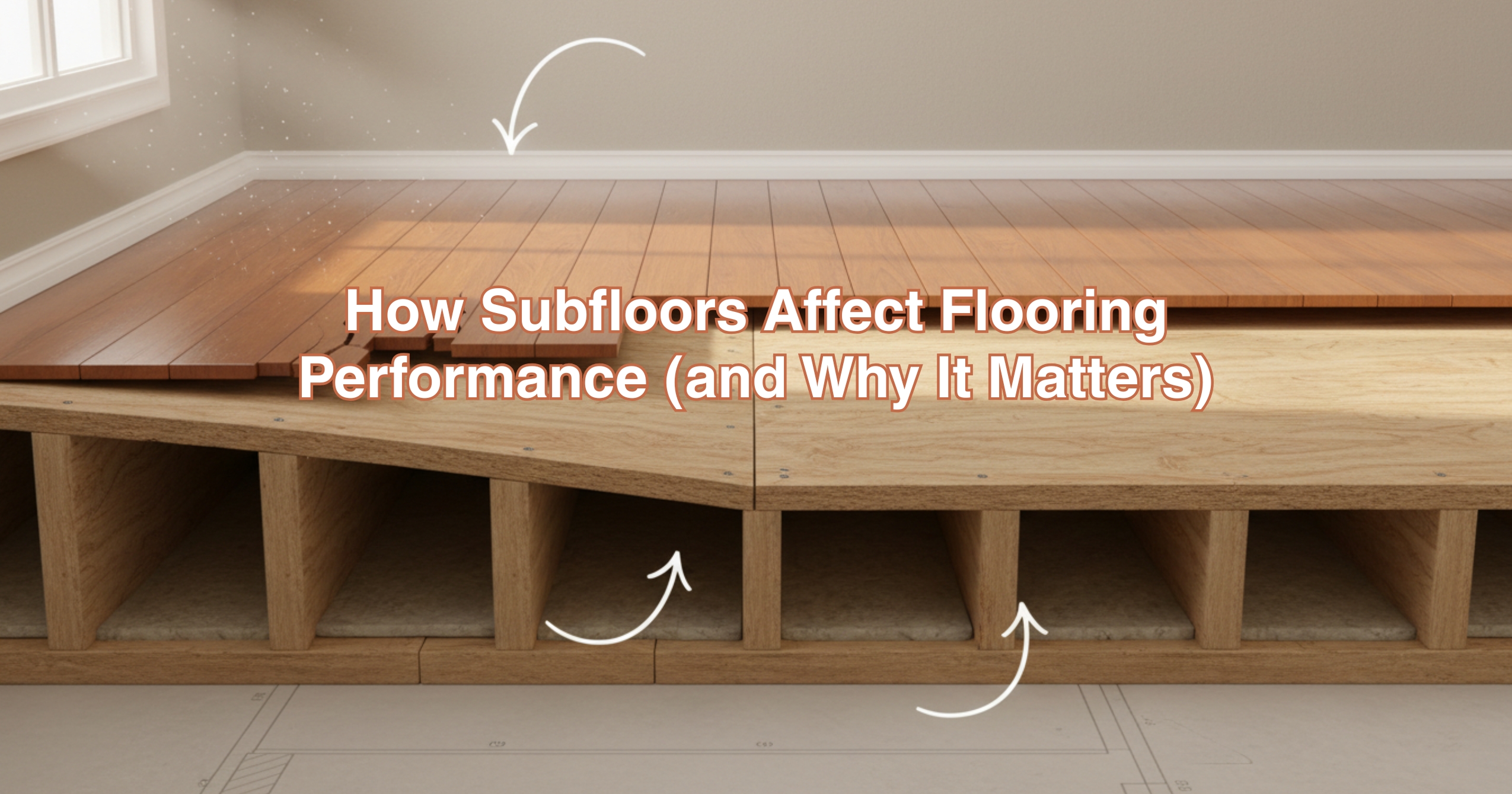
The subfloor is the structural layer beneath your finished flooring.
It is usually made from:
plywood
OSB (oriented strand board)
concrete slab
The subfloor:
supports the flooring system
transfers weight and movement
influences sound, feel, and stability
Even though you never see it, you experience its effects every time you walk across the floor.
How Subfloors Affect the Way Flooring Feels
The subfloor has a major impact on:
firmness underfoot
bounce or flex
vibration when walking
how solid or quiet the floor feels
A smooth, secure, properly prepared subfloor creates:
better walking comfort
more even plank support
less movement noise
A poorly prepared subfloor can lead to the opposite experience.
Common Subfloor Conditions That Affect Performance
1) Uneven or Unlevel Subfloors
Even minor unevenness can cause:
plank movement
hollow or clicking sounds
joint separation over time
Leveling compounds or surface preparation are sometimes needed to improve stability.
2) Gaps, Soft Spots, or Loose Panels
Wood subfloors with movement can create:
squeaking
bounce or flex
stress on locking joints
Securing the subfloor improves both feel and longevity.
3) Concrete Moisture or Vapor Transmission
Concrete slabs can release:
moisture vapor
mineral deposits
This may lead to:
lifting
discoloration
adhesive failure in glued installations
Moisture testing and vapor barriers are often recommended where appropriate.
How Subfloors Influence Sound and Noise
The subfloor affects how sound travels through a room or between floors.
A stable, well-supported subfloor helps reduce:
echo
hollow step noise
vibration impact
This becomes especially important in:
upstairs rooms
condos or multi-level homes
shared living spaces
Underlayment can also play a supportive role, but it does not replace proper subfloor preparation.
Why the Same Flooring Can Perform Differently in Two Homes
Two homeowners may install the same flooring product and have very different experiences.
That difference often comes down to:
subfloor material
preparation quality
installation environment
Flooring does not exist on its own.
It is part of a larger system that includes the surface beneath it.
Common Questions Homeowners Ask About Subfloors
“Can thicker flooring fix a bad subfloor?”
Thicker flooring may reduce minor visual imperfections, but it does not correct foundational issues. Subfloor preparation remains essential.
“Do I always need leveling?”
Not always, but subfloors must be:
flat
stable
properly supported
Your installer evaluates whether preparation is needed based on site conditions.
“Why does subfloor prep affect installation cost?”
Because preparation impacts:
longevity
warranty coverage
long-term performance
It is an investment in how the floor will feel and function for years to come.
Beginner-Friendly Rule of Thumb
Better subfloor preparation usually leads to:
quieter floors
smoother walking comfort
stronger locking joints
longer-lasting performance
It isn’t exciting, but it matters.
Key Takeaway: What’s Under the Floor Matters as Much as the Floor Itself
Flooring performance is not determined by product specs alone.
The subfloor plays a major role in:
comfort
sound
stability
long-term durability
Understanding how the subfloor influences comfort, sound, stability, and long-term performance helps explain why two identical floors can feel and behave differently in different homes. A properly prepared, well-supported subfloor improves walking comfort, reduces noise, and supports stronger locking joints, while poor subfloor conditions can shorten lifespan and affect the way a floor performs.
Now that you understand how the subfloor affects comfort and stability, the next natural question is how long different flooring types actually last in real-world conditions. In our next article, we explore How Long Different Flooring Types Actually Last, so you can set realistic expectations about lifespan based on material, lifestyle, and environment. If you’d like help evaluating your subfloor conditions or reviewing installation options, visit our showroom at 2591 N Forsyth Rd Ste A, Orlando, FL 32807.