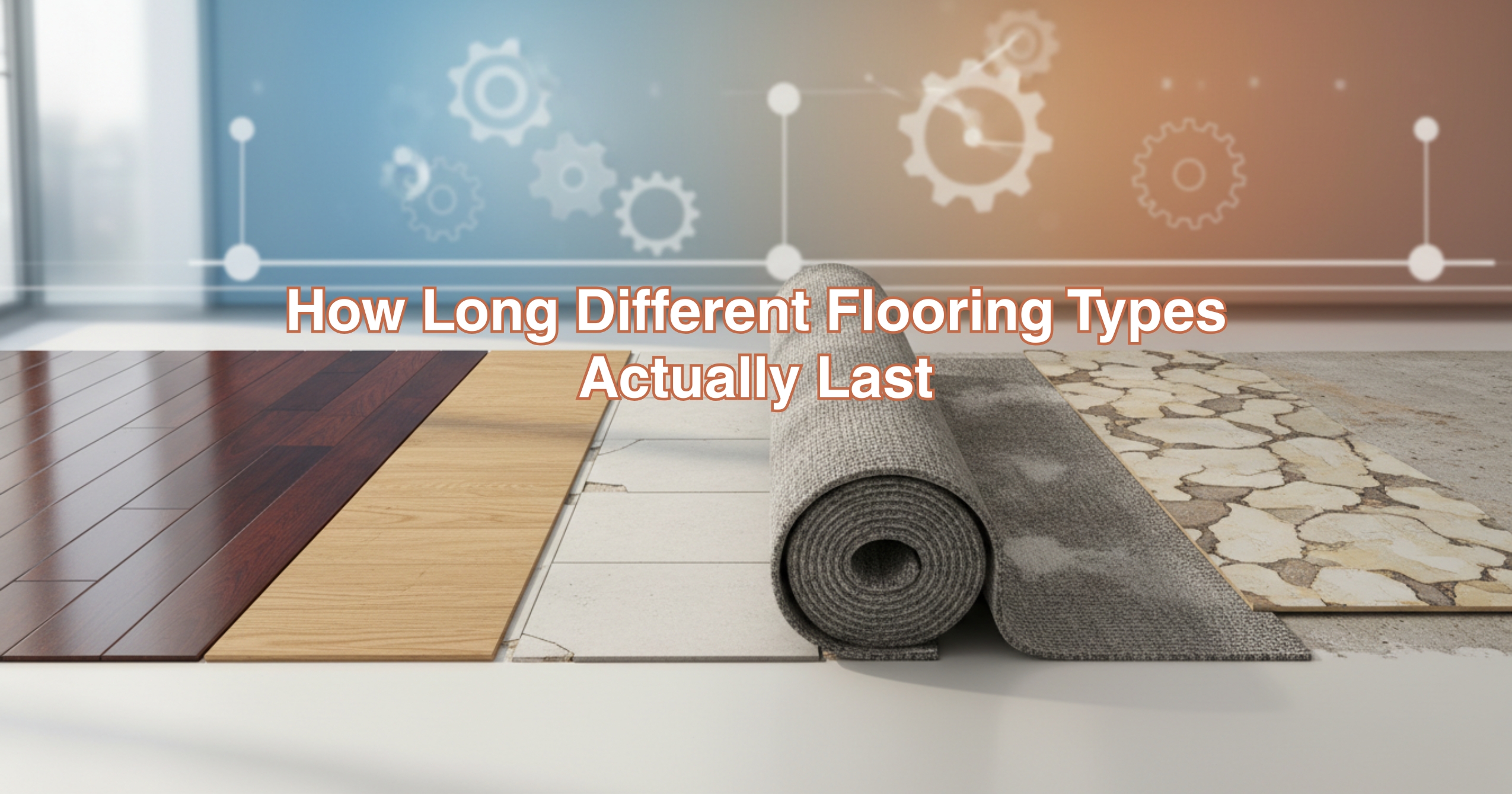
How Long Does Flooring Last? Real Lifespan of Vinyl, Hardwood, Laminate, and Rigid Core
How Long Different Flooring Types Actually Last
One of the most common questions homeowners ask when choosing flooring is simple: How long will this floor actually last?
Most product brochures list warranties and performance claims, but those numbers don’t always reflect how flooring behaves in real homes, with pets, kids, furniture movement, everyday wear, and changing conditions. The reality is that flooring lifespan depends on a combination of material, installation environment, lifestyle, and maintenance habits.
This guide takes a calm, realistic look at how long different flooring types typically last in everyday living conditions, so you can choose a material that aligns with your expectations instead of marketing assumptions.
What Really Affects Flooring Lifespan
Instead of thinking in terms of “good” vs “bad” flooring, it helps to understand the key factors that influence longevity:
traffic level and household activity
presence of pets or rolling furniture
subfloor quality and installation prep
wear layer and surface finish
moisture or humidity exposure
cleaning and maintenance habits
Two identical floors can age very differently depending on how they are used.
How Long Vinyl Plank and Rigid Core Flooring Typically Last
Vinyl plank, SPC, and WPC flooring are popular because they hold up well in busy homes with regular foot traffic and occasional spills.
In most residential environments, well-installed vinyl or rigid core flooring can last approximately:
10 to 20+ years under normal use
longer in low-traffic spaces
shorter in extremely active or rough-use conditions
Why They Last This Long
Rigid core and vinyl products:
resist surface abrasion
tolerate incidental moisture
maintain structure in high-traffic zones
However, lifespan can still be shortened by:
dragging heavy furniture
long-term standing moisture
poor subfloor preparation
They are durable, but not invincible.
How Long Engineered Hardwood Usually Lasts
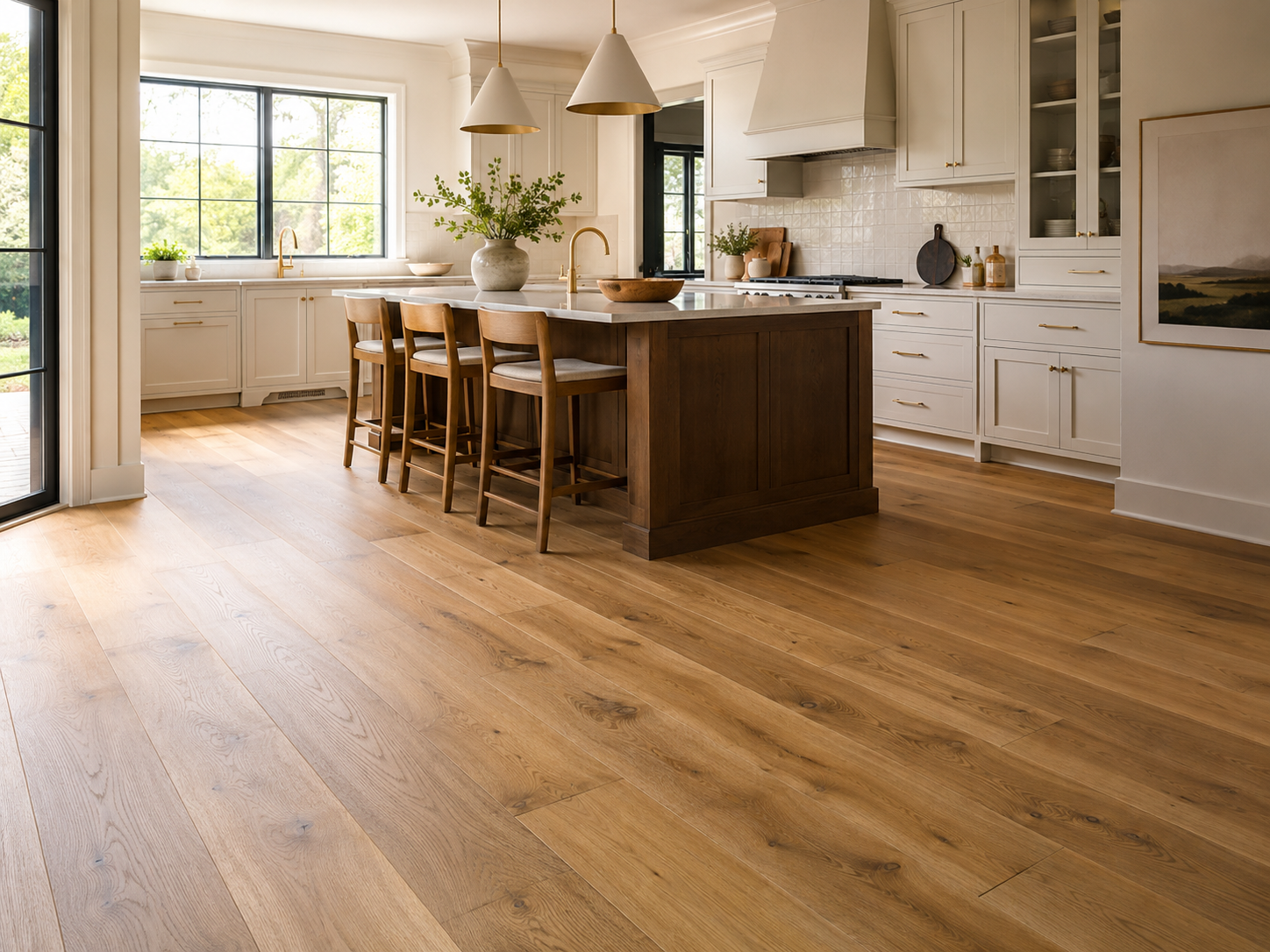
Engineered hardwood is a natural material and ages differently than synthetic flooring.
In most homes, engineered hardwood can last:
20 to 30+ years
longer when cared for gently
shorter in rough or moisture-exposed spaces
Longevity depends on:
veneer thickness
refinishing potential
humidity control
Engineered hardwood is less about resisting every scratch and more about developing character over time.
How Long Laminate Flooring Typically Lasts
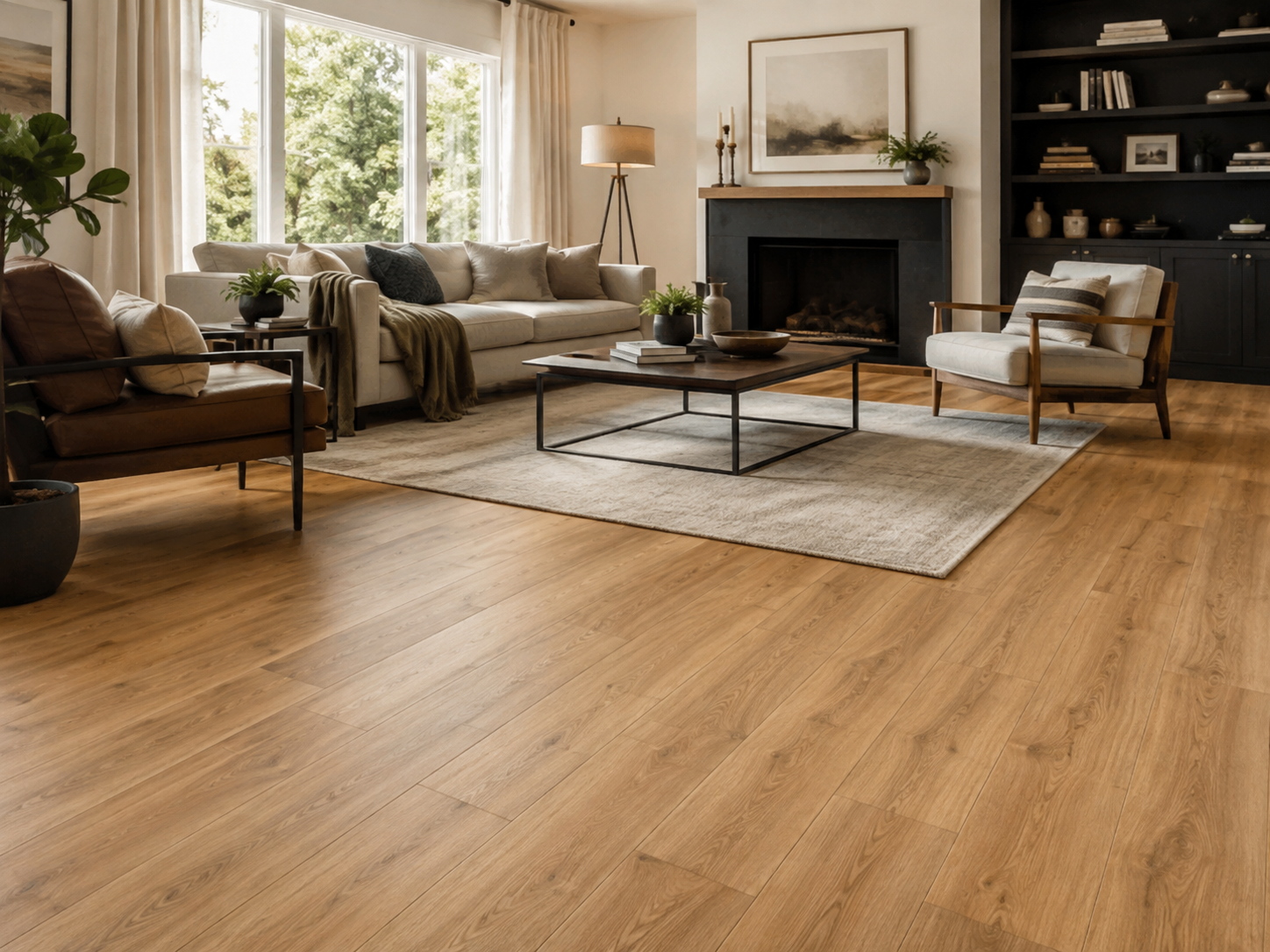
Laminate flooring can perform well in the right environment.
In most residential settings, laminate lasts:
10 to 15 years on average
longer in low-traffic spaces
less in moisture-prone areas
Laminate performs best when:
spills are cleaned promptly
rooms remain dry
installation conditions are stable
It is not ideal for high-moisture locations, but can be a practical choice elsewhere.
Why Two Homes Can See Different Results With the Same Flooring
Lifespan varies because every home is different.
Factors that create different outcomes include:
children or pets vs quiet households
upstairs vs main-level installation
climate and humidity levels
heavy vs light furniture movement
This is why flooring lifespan is best understood as a range, not a fixed guarantee.
Common Homeowner Questions About Flooring Longevity
“Does a thicker plank last longer?”
Not necessarily. Wear layer and installation quality often matter more than total plank thickness.
“Do warranties equal lifespan?”
No. Warranties typically cover manufacturing defects, not real-world wear and tear. They are not a prediction of how the floor will age in your home.
“Which flooring lasts the longest overall?”
It depends on:
lifestyle
expectations
tolerance for visible wear
Rigid core flooring maintains appearance well in active homes.
Engineered hardwood can last decades when treated gently.
Both are valid, just different.
Simple Lifespan Reference Guide (Beginner-Friendly)
Vinyl Plank / SPC / WPC
Approx. 10–20+ years in typical homes
Engineered Hardwood
Approx. 20–30+ years with mindful care
Laminate Flooring
Approx. 10–15 years depending on environment
These are realistic average ranges, not guarantees, but helpful for expectation-setting.
Key Takeaway: Flooring Lifespan Depends on How It’s Lived With
No flooring lasts forever, but the right material, in the right environment, can serve your home well for many years.
When lifespan expectations align with:
lifestyle
traffic level
environment
flooring becomes a confident decision, not a leap of uncertainty.
Understanding the realistic lifespan of different flooring types helps set expectations before installation rather than learning through trial and error. Vinyl plank and rigid core flooring tend to maintain appearance well in active homes, engineered hardwood can last for decades when treated gently, and laminate performs best in dry, stable environments. When you choose a flooring material that matches your lifestyle and environment, it is far more likely to age the way you expect.
Now that you have a clearer understanding of flooring lifespan, the next step is learning how to avoid common mistakes that shorten it, especially those that lead to early regret. In our next article, we explore Common Flooring Mistakes (and How to Avoid Costly Regret) so you can plan your flooring project with clarity and confidence. If you’d like help reviewing flooring options or discussing which materials best align with your long-term goals, visit our showroom at 2591 N Forsyth Rd Ste A, Orlando, FL 32807.