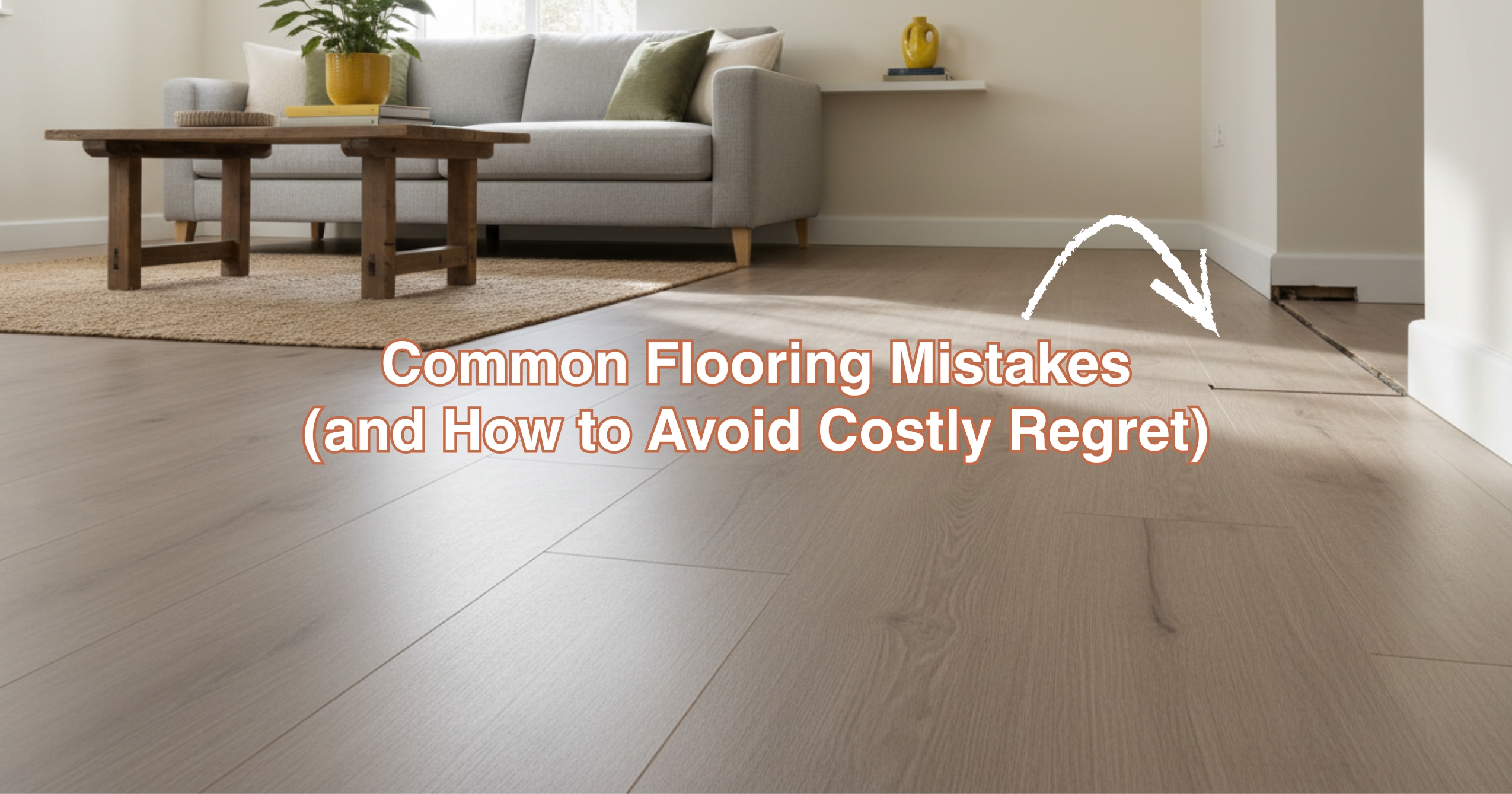
Common Flooring Mistakes (and How to Avoid Costly Regret)
Common Flooring Mistakes (and How to Avoid Costly Regret)
Introduction
Most flooring regrets don’t come from choosing the wrong product. They happen because important details were misunderstood, rushed, or overlooked early in the planning process. Once flooring is installed, those decisions become difficult and expensive to undo, which is why understanding common mistakes ahead of time can save both money and frustration.
This guide highlights the mistakes homeowners most often make when choosing flooring, not to alarm or discourage, but to provide clarity and confidence before installation begins.
Mistake #1: Choosing Flooring Based on Price Per Square Foot Alone
It is tempting to compare flooring products by the sticker price, but flooring cost involves more than material cost alone.
Overlooking factors such as:
subfloor preparation
underlayment
transitions and trims
installation method
can lead to unexpected expenses later.
Better approach:
Compare flooring options based on total project value, not just price per box.
Mistake #2: Assuming All “Waterproof” Floors Perform the Same
Waterproof flooring is often misunderstood.
While many rigid-core and vinyl products resist moisture within the plank, they may not:
seal seams completely
protect subfloors from standing water
prevent trapped moisture issues
Better approach:
Use waterproof flooring as added protection for everyday spills, not as a substitute for moisture management.
Mistake #3: Ignoring Subfloor Conditions
Even the highest-quality flooring cannot perform well over:
uneven surfaces
loose or bouncing subfloors
moisture-active slabs
Skipping or minimizing subfloor preparation can result in:
hollow sounds
plank movement
premature wear
Better approach:
View subfloor preparation as part of the flooring system, not an optional extra.
Mistake #4: Choosing Thickness for the Wrong Reasons
Thicker planks may improve:
comfort
sound
stability
but they do not automatically guarantee durability.
Surface performance is influenced more by:
wear layer
finish
installation quality
Better approach:
Choose plank thickness for feel and comfort, and evaluate wear layer for durability.
Mistake #5: Selecting Flooring Without Lifestyle Consideration
Some regrets happen because flooring was chosen to match a trend rather than the way the home is used.
For example, flooring that performs beautifully in a quiet household may not wear the same way in a home with:
pets
kids
rolling chairs
frequent activity
Better approach:
Match your flooring choice to traffic level, room function, and daily routine.
Mistake #6: Overlooking Long-Term Maintenance Expectations
Different flooring types age and wear differently.
Unexpected regret can happen when homeowners realize:
some materials scratch more visibly
some develop natural patina
some require gentler cleaning habits
Better approach:
Choose flooring with realistic expectations of how it will age over time.
Mistake #7: Rushing the Decision Process
Flooring is a long-term investment, and quick decisions made under time pressure can lead to future dissatisfaction.
Rushed decisions may overlook:
warranty considerations
subfloor impacts
comfort and acoustics
installation requirements
Better approach:
Give yourself time to compare samples, ask questions, and review options calmly.
Common Questions Homeowners Ask About Flooring Mistakes
“What is the most expensive mistake people make?”
Skipping subfloor preparation or moisture testing often leads to the costliest corrections later.
“Is it bad to choose flooring based only on appearance?”
Not bad, just risky. Appearance matters, but performance matters too.
“How do I avoid regret after installation?”
Clarity before installation is the best prevention:
understand wear layer vs thickness
evaluate your subfloor
match flooring to lifestyle
Confidence comes from informed decisions.
Beginner-Friendly Checklist: Smart Flooring Decision Guide
Before finalizing your flooring choice:
consider lifestyle and traffic level
understand wear layer and plank construction
evaluate your subfloor conditions
plan for total project cost, not just materials
set realistic expectations for aging and maintenance
Small insights now can prevent large regrets later.
Key Takeaway: Regret Is Preventable With the Right Information
Most flooring mistakes are not about the product. They are about missing context during planning.
By understanding:
how flooring performs
what affects longevity
how to align expectations
you can move forward with a decision that feels confident, practical, and long-lasting.
Understanding the most common flooring mistakes helps reduce the risk of unexpected problems and regret after installation. Many issues come from overlooked subfloor conditions, misunderstanding waterproof claims, or choosing flooring based on price or appearance alone, rather than lifestyle and environment. When you take time to evaluate comfort, durability, installation needs, and long-term expectations, flooring decisions become clearer and more reliable.
Now that we’ve covered the most common flooring mistakes, the next step is understanding what flooring costs really mean, beyond price per square foot. In our next article, we explore What Flooring Costs Really Mean (Beyond Price Per Square Foot) to help you evaluate cost, value, and long-term investment more clearly.
If you’d like help reviewing plans or discussing your flooring options before installation, visit our showroom at 2591 N Forsyth Rd Ste A, Orlando, FL 32807.