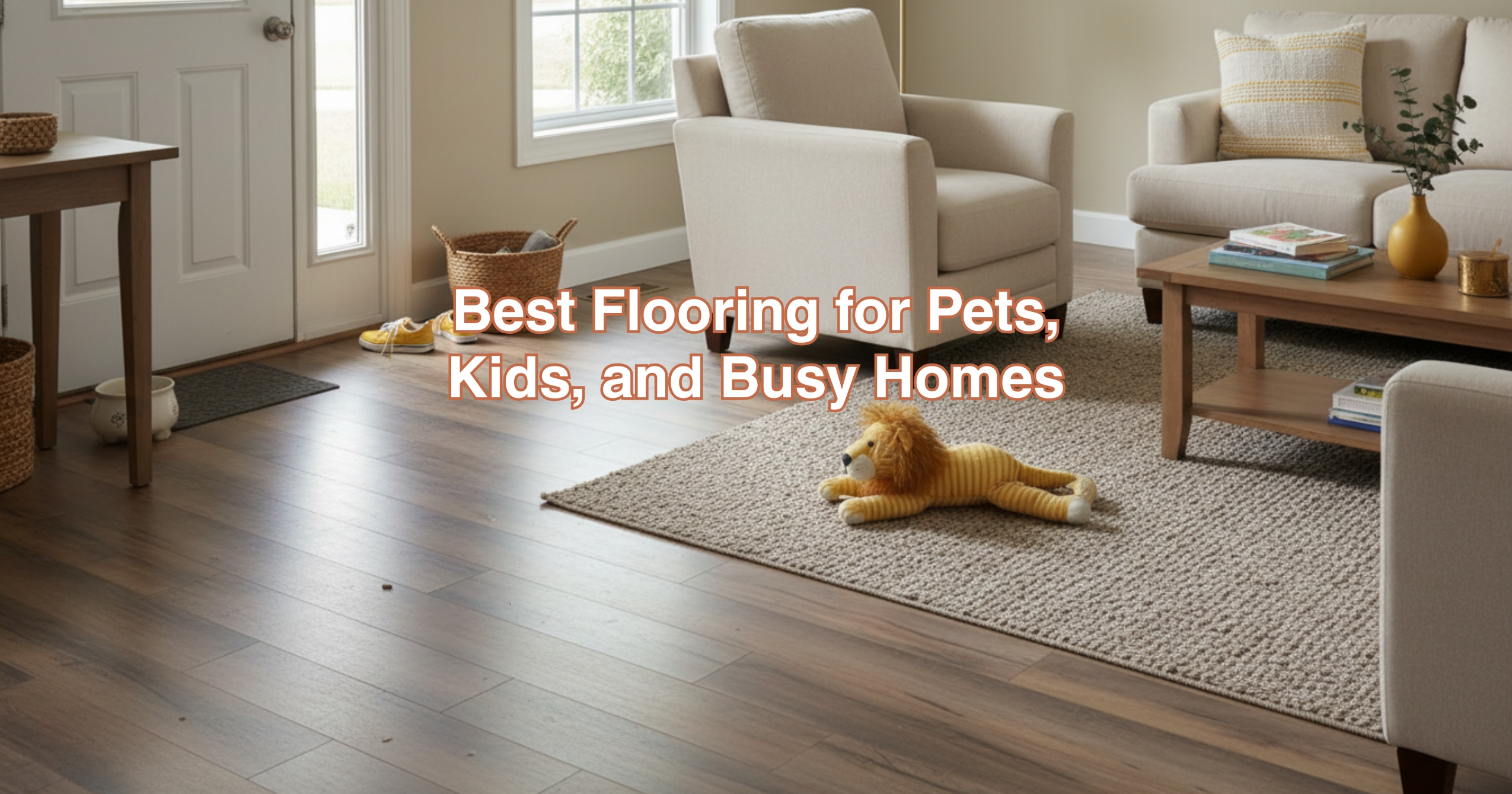
Best Flooring for Pets, Kids, and Busy Homes: Durability & Real-World Performance
Best Flooring for Pets, Kids, and Busy Homes
Introduction
Every home has its own rhythm, and in busy households, that rhythm usually includes kids running through hallways, pets racing across the floor, backpacks being dropped, chairs scooting, and the occasional spill or surprise mess. In these environments, flooring is not just a design choice. It becomes a daily-use surface that needs to balance durability, comfort, and practicality.
This guide focuses on how different flooring types perform in real-world family settings. Instead of looking only at technical specifications, we’ll explore how floors hold up to scratches, moisture, activity, and everyday wear so you can choose a flooring option that fits how your household truly lives.
What Makes Flooring “Family-Friendly”?
In busy homes, the most important qualities are usually:
scratch and abrasion resistance
tolerance to spills and moisture
comfort underfoot
sound and impact feel
low-maintenance care
Different flooring types achieve these qualities in different ways, which is why the best option depends on your lifestyle, not just the product label.
How Vinyl and Rigid Core Flooring Perform in Active Homes
Vinyl plank (including SPC and WPC rigid core flooring) is one of the most popular choices for busy households, and for good reason.
It typically offers:
strong surface wear protection
resistance to everyday spills
easy cleaning and maintenance
stable performance in high-traffic areas
SPC Rigid Core in Family Environments
SPC flooring is:
firm
stable
impact-resistant
It works especially well in:
kitchens
play areas
hallways and entryways
because it holds up well under repeated foot traffic and movement.
WPC Rigid Core in Living Spaces
WPC flooring:
feels slightly softer and warmer underfoot
can be quieter when walked on
is comfortable in family gathering areas
It is often preferred in:
bedrooms
living rooms
upstairs spaces
where comfort and sound control matter more than firmness.
How Engineered Hardwood Performs in Busy Homes
Engineered hardwood can work in family households, but expectations matter.
It offers:
natural warmth and premium appearance
authentic wood character
However, it may:
show dents and scratches more easily
require protective pads under furniture
benefit from area rugs in high-traffic zones
It is best suited for:
formal rooms
lower-activity spaces
families comfortable with natural wear and patina
How Laminate Flooring Handles Pets and Kids
Laminate flooring can be:
scratch-resistant
visually realistic
budget-friendly
However:
moisture exposure can be a concern in active homes
spills should be cleaned promptly
not all laminate products tolerate standing water
It can work well in:
dry areas
low-to-moderate traffic rooms
with responsible care habits.
Common Concerns Homeowners Have
“Which flooring type is most scratch-resistant?”
Scratch performance depends more on:
wear layer
finish
surface texture
than the material alone.
Floors will not be completely scratch-proof, but some are more forgiving than others.
“Which flooring is best if we have big dogs?”
Rigid core vinyl (especially SPC) is often preferred in:
high-energy pet households
homes with frequent running or sliding
because it tends to resist visible abrasion well.
“What about noise?”
WPC and thicker planks typically:
reduce impact sound
feel warmer and quieter
which can be helpful in upstairs or shared living areas.
Best Choices by Room Type (Beginner-Friendly Guide)
High-Traffic Zones
kitchens, halls, entryways
→ SPC rigid core or durable vinyl plank
Family Living Spaces
living rooms, dens, shared areas
→ WPC rigid core or thicker vinyl plank
Bedrooms & Low-Traffic Rooms
→ WPC vinyl or engineered hardwood (with care)
Moisture-Prone Areas
→ Water-tolerant vinyl flooring with proper installation prep
No single flooring fits every situation.
The best choice is the one aligned with how your household lives day to day.
Practical Tips to Extend Flooring Life in Busy Homes
No matter which flooring you choose:
add felt pads under furniture
use rugs in entryways and play areas
trim pet nails regularly
avoid dragging heavy items
Small habits can meaningfully extend appearance and lifespan.
Key Takeaway: Choose Flooring for Real-Life, Not Perfect Conditions
The goal in a busy home is not to find a floor that never shows wear, but one that wears well, functions comfortably, and supports daily living without stress.
When matched thoughtfully to:
lifestyle
traffic level
family activity patterns
flooring becomes something you don’t have to worry about.
And that peace of mind matters most.
Conclusion
Understanding how different flooring types perform in active, high-traffic, and family environments helps make the selection process more practical and less stressful. Vinyl and rigid core flooring tend to offer strong everyday durability and easy maintenance, while engineered hardwood and laminate can work well in the right spaces with realistic expectations and care. When you choose flooring based on how your household truly lives, your floors become more functional, comfortable, and resilient in daily use.
Now that we’ve looked at how flooring performs in active households, the next step is understanding how your subfloor affects comfort, sound, and long-term performance. In our next article, we explore How Subfloors Affect Flooring Performance (and Why It Matters) so you can understand what’s happening beneath the surface and why it can make two identical floors perform very differently. If you’d like help choosing flooring based on your lifestyle, household traffic, and room-by-room needs, visit our showroom.